

What is the refractive index of Two - component Silicone Structural Adhesive?
Nov 14, 2025
Leave a message
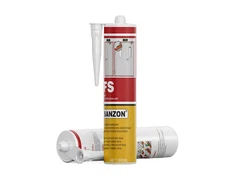
As a supplier of Two - component Silicone Structural Adhesive, I often encounter various technical inquiries from customers. One question that has recently come up more frequently is: "What is the refractive index of Two - component Silicone Structural Adhesive?" In this blog post, I will delve into this topic, providing you with a comprehensive understanding of the refractive index of this adhesive and its significance in practical applications.
Understanding the Refractive Index
Before we discuss the refractive index of Two - component Silicone Structural Adhesive, let's first understand what the refractive index is. The refractive index, denoted as (n), is a measure of how much a ray of light bends when it passes from one medium to another. It is defined as the ratio of the speed of light in a vacuum ((c)) to the speed of light in the medium ((v)), i.e., (n=\frac{c}{v}).
The refractive index is a fundamental property of a material and is influenced by factors such as the material's chemical composition, density, and temperature. Different materials have different refractive indices, which can range from less than 1 (for some exotic materials) to over 2 (for certain crystals).
Refractive Index of Two - component Silicone Structural Adhesive
Two - component Silicone Structural Adhesive is a type of adhesive that consists of two parts: a base component and a curing agent. When these two components are mixed together, a chemical reaction occurs, resulting in the formation of a strong, durable bond.
The refractive index of Two - component Silicone Structural Adhesive typically ranges from 1.4 to 1.5. This value is relatively close to that of many common optical materials, such as glass (refractive index around 1.5) and some plastics. The specific refractive index of the adhesive can vary depending on its formulation, which may include different types of silicone polymers, fillers, and additives.
The relatively stable and predictable refractive index of Two - component Silicone Structural Adhesive makes it suitable for applications where optical clarity and light transmission are important. For example, in the construction of glass facades, the adhesive is used to bond glass panels together. A consistent refractive index ensures that there is minimal distortion of light passing through the bonded areas, maintaining the overall aesthetic and optical quality of the facade.
Significance of Refractive Index in Applications
Optical Applications
In optical devices and systems, the refractive index of the adhesive plays a crucial role in determining the performance of the device. For instance, in the assembly of lenses or prisms, the adhesive is used to bond different optical elements together. If the refractive index of the adhesive does not match that of the optical elements, it can cause refraction and reflection at the interface, leading to loss of light and degradation of the optical performance.
Two - component Silicone Structural Adhesive with a well - controlled refractive index can be used to minimize these issues. By carefully selecting an adhesive with a refractive index that closely matches the optical elements, the optical path can be maintained, and the efficiency and quality of the optical device can be improved.
Construction Applications
In the construction industry, the refractive index of the adhesive can also have an impact on the appearance and performance of the building. As mentioned earlier, in glass facades, the adhesive's refractive index affects the visual quality of the glass panels. A mismatch in refractive index can result in visible lines or distortions at the bonded areas, which can be aesthetically unpleasing.
Moreover, in applications where the adhesive is exposed to sunlight, a stable refractive index helps to prevent yellowing or discoloration over time. This is important for maintaining the long - term appearance and durability of the building.
Comparison with Other Sealants
When comparing Two - component Silicone Structural Adhesive with other types of sealants, such as Acidic Silicone Sealant and PU Foam, the refractive index is one of the factors to consider.
Acidic Silicone Sealant typically has a refractive index that is similar to that of Two - component Silicone Structural Adhesive. However, acidic sealants are more prone to corrosion and may not be suitable for all applications, especially those involving sensitive materials.
PU Foam, on the other hand, has a lower refractive index and is mainly used for insulation and filling purposes rather than for applications requiring high optical clarity. It is not typically used in applications where light transmission and optical quality are important.
Factors Affecting the Refractive Index
Temperature
The refractive index of Two - component Silicone Structural Adhesive is temperature - dependent. As the temperature increases, the refractive index generally decreases. This is because the increase in temperature causes the molecules in the adhesive to move more freely, resulting in a decrease in the density of the material and a corresponding decrease in the refractive index.
In practical applications, it is important to consider the temperature range in which the adhesive will be used. If the temperature varies significantly, it may be necessary to select an adhesive with a low temperature coefficient of refractive index to ensure stable optical performance.
Filler Content
The addition of fillers to the adhesive can also affect its refractive index. Fillers are often added to improve the mechanical properties of the adhesive, such as strength and stiffness. However, different fillers have different refractive indices, and their presence can change the overall refractive index of the adhesive.


For example, if a filler with a high refractive index is added to the adhesive, the refractive index of the resulting mixture will increase. Conversely, a filler with a low refractive index will cause the refractive index of the adhesive to decrease. Therefore, when formulating the adhesive, the type and amount of filler need to be carefully controlled to achieve the desired refractive index.
Quality Control and Testing
To ensure the quality and consistency of the refractive index of Two - component Silicone Structural Adhesive, strict quality control measures are implemented during the manufacturing process. These measures include:
- Raw Material Selection: Only high - quality raw materials with consistent properties are used in the production of the adhesive.
- Formulation Optimization: The formulation of the adhesive is carefully optimized to achieve the desired refractive index and other performance characteristics.
- Testing and Monitoring: Samples of the adhesive are regularly tested using specialized equipment, such as refractometers, to measure the refractive index. Any deviations from the specified range are immediately addressed to ensure that the final product meets the quality standards.
Conclusion
In conclusion, the refractive index of Two - component Silicone Structural Adhesive is an important property that affects its performance in various applications, especially those related to optics and construction. With a typical refractive index ranging from 1.4 to 1.5, this adhesive offers good optical clarity and light transmission, making it suitable for a wide range of applications.
If you are looking for a high - quality Two - component Silicone Structural Adhesive or other related products such as High Quality Weatherproof Silicone Sealant, we are here to provide you with the best solutions. Our products are manufactured with strict quality control measures to ensure consistent performance and reliability. We welcome you to contact us for more information and to discuss your specific requirements. Whether you are involved in optical device manufacturing, construction, or any other industry that requires high - performance adhesives, we are confident that we can meet your needs.
References
- "Handbook of Adhesive Technology", Second Edition, edited by Andrew Pizzi and K. L. Mittal.
- "Optical Materials Science and Engineering", by Mark J. Weber.
- Technical data sheets of Two - component Silicone Structural Adhesive from leading manufacturers.
Send Inquiry