

How does acidic silicone sealant work?
Nov 27, 2025
Leave a message
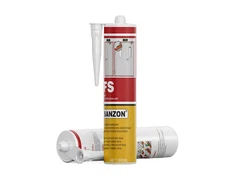
Acidic silicone sealant is a widely used product in various industries and household applications. As a supplier of Acidic Silicone Sealant, I am often asked about how this remarkable material works. In this blog post, I will delve into the science behind acidic silicone sealant, its applications, and why it's a popular choice for many projects.
The Composition of Acidic Silicone Sealant
Acidic silicone sealant is primarily composed of silicone polymers, cross - linking agents, fillers, and additives. Silicone polymers are the backbone of the sealant. They are long - chain molecules made up of silicon, oxygen, carbon, and hydrogen atoms. These polymers provide the sealant with its flexibility, durability, and resistance to environmental factors.
Cross - linking agents play a crucial role in the curing process. When the sealant is exposed to air, the cross - linking agents react with the silicone polymers, forming a three - dimensional network. This network gives the sealant its solid structure and enhances its adhesive properties.
Fillers are added to the sealant to improve its physical properties. They can increase the sealant's strength, reduce its cost, and modify its viscosity. Common fillers include calcium carbonate, silica, and talc.
Additives are used to impart specific properties to the sealant. For example, some additives can improve the sealant's resistance to UV radiation, while others can enhance its anti - microbial properties.
The Curing Process
The curing of acidic silicone sealant is a chemical reaction that occurs when the sealant is exposed to moisture in the air. This reaction is known as hydrolysis and condensation.
When the sealant is applied, the acetic acid in the sealant is released as a by - product of the curing reaction. This is why acidic silicone sealant has a characteristic vinegar - like smell. The acetic acid helps to speed up the curing process by reacting with the cross - linking agents and silicone polymers.
The hydrolysis step involves the reaction of the cross - linking agents with water molecules in the air. This breaks the cross - linking agents into smaller molecules, which can then react with the silicone polymers. The condensation step follows, where the smaller molecules react with the silicone polymers to form a cross - linked network.
The curing time of acidic silicone sealant depends on several factors, including the temperature, humidity, and thickness of the sealant layer. In general, the sealant will start to skin over within 10 - 20 minutes and will be fully cured within 24 - 48 hours.
Adhesion Mechanism
One of the key features of acidic silicone sealant is its excellent adhesion to a wide range of substrates. The adhesion mechanism is based on both chemical and physical interactions.
Chemically, the acetic acid in the sealant can etch the surface of the substrate, creating a rough surface that provides more sites for the sealant to bond to. The cross - linked silicone network also forms chemical bonds with the substrate, further enhancing the adhesion.


Physically, the sealant flows into the pores and irregularities of the substrate surface, creating a mechanical interlock. This mechanical interlock helps to hold the sealant in place and prevents it from peeling off.
Applications of Acidic Silicone Sealant
Acidic silicone sealant has a wide range of applications due to its excellent sealing, adhesion, and flexibility properties.
Construction Industry
In the construction industry, acidic silicone sealant is used for sealing joints in windows, doors, and curtain walls. It can prevent water infiltration, air leakage, and the entry of dust and pollutants. The sealant's flexibility allows it to accommodate the movement of the building structure due to temperature changes and seismic activity.
Automotive Industry
In the automotive industry, acidic silicone sealant is used for sealing engine components, such as gaskets and O - rings. It can withstand high temperatures and pressures, and its chemical resistance protects the components from corrosion and damage.
Household Applications
At home, acidic silicone sealant is a popular choice for sealing around bathtubs, sinks, and showers. It can prevent water leakage and the growth of mold and mildew. You can find our Anti - mildew Sealant for Kitchen and Bathroom which is designed specifically for these household applications.
Advantages of Acidic Silicone Sealant
- Excellent Sealing Properties: Acidic silicone sealant can form a tight seal that prevents the leakage of water, air, and other substances.
- Good Adhesion: It adheres well to a variety of substrates, including glass, metal, ceramic, and plastic.
- Flexibility: The sealant remains flexible even after curing, which allows it to accommodate movement and vibration without cracking.
- Weather Resistance: It can withstand extreme temperatures, UV radiation, and moisture, making it suitable for both indoor and outdoor applications.
Disadvantages of Acidic Silicone Sealant
- Corrosive: The acetic acid released during the curing process can be corrosive to some metals, such as aluminum and copper. Therefore, it should not be used on these metals without proper surface preparation.
- Odor: The vinegar - like smell of acidic silicone sealant can be unpleasant, especially in enclosed spaces. Adequate ventilation is required during application.
Our Product Range
As a supplier, we offer a high - quality Acidic Silicone Sealant that meets the industry standards. Our sealant is formulated with the latest technology to ensure excellent performance and durability.
We also provide Two - component Silicone Weather - resistant Adhesive for more demanding applications. This adhesive offers superior strength and weather resistance, making it suitable for large - scale construction projects.
Contact for Purchase and Negotiation
If you are interested in our acidic silicone sealant or other sealant products, we welcome you to contact us for purchase and negotiation. Our professional team will be happy to provide you with detailed product information, samples, and competitive pricing. We are committed to meeting your specific requirements and providing you with the best sealing solutions.
References
- Dow Corning. "Silicone Sealants: A Technical Overview." Dow Corning Corporation, 2018.
- Sika. "Sealant Technology Handbook." Sika AG, 2019.
- Master Bond. "Silicone Adhesives and Sealants." Master Bond Inc., 2020.
Send Inquiry