


AI Data Center Expansion Opens A New Reliability Conversation For Industrial Silicone Sealants
Sep 23, 2026
Leave a message
The rapid expansion of artificial intelligence infrastructure is changing electricity markets, cooling technology and construction schedules. It is also creating a less visible materials question: how should seals, bonds and joints be specified in facilities expected to operate continuously under demanding thermal and electrical conditions?
The U.S. Department of Energy's current data center resource hub highlights the scale of the change. Its 2025 update cites scenarios in which data centers could account for roughly 9.5% to 15.3% of U.S. electricity use by 2030, with a central estimate of 11.8%. DOE is supporting advanced cooling and energy-efficiency initiatives as the sector grows.
Silicone materials will not determine the energy future of data centers. But they are used across many interfaces that support reliable operation: exterior joints, roof and equipment penetrations, HVAC assemblies, electrical enclosures, sensors, power electronics and some liquid-cooling components. The opportunity is significant, yet it comes with a warning. A construction weatherseal, electronics adhesive, thermal material and tested firestop are not interchangeable simply because each contains silicone.
For sealant manufacturers and buyers, the data center market rewards precision. Product selection begins with the function, exposure and applicable system-not with a broad claim that silicone "handles high temperatures."
Why Data Center Growth Matters to Material Suppliers
Data centers combine characteristics of several markets. They are large buildings, industrial plants, electrical infrastructure and controlled environments. They contain roofs, façades and doors, but also cooling loops, cable routes, power-distribution equipment, batteries, generators and sensitive electronics.
Several trends increase materials scrutiny:
facilities are being built quickly and at large scale;
computing density raises heat-removal demands;
downtime has high commercial consequences;
cooling architectures are evolving;
electrical loads and backup systems are expanding;
owners want traceability and predictable maintenance;
water use and energy efficiency receive public attention;
fire compartmentation and life safety remain critical;
global supply chains require consistent documentation.
A small seal failure can have outsized consequences when it allows water near electrical equipment, disrupts pressure control, leaks cooling fluid or compromises a rated penetration. This is why data center buyers increasingly distinguish between general sealing and application-qualified materials.
One Facility, Many Silicone Categories
Building-envelope weatherseals
Exterior silicone can seal curtain walls, precast panel joints, windows, louvers and roof-related transitions. Requirements include movement, UV resistance, adhesion, water control and climate durability.
Interior air-control joints
Silicone may contribute to interior perimeter seals or controlled-room boundaries. Low emissions, clean application and adhesion to coatings can matter. Airflow strategy and fire requirements determine the correct system.
HVAC and mechanical equipment
Sealants can appear at duct, casing, panel and equipment interfaces. Temperature, vibration, condensate, cleaning chemicals and pressure influence selection. A product suitable for a room joint may not be approved for an air-stream or mechanical-equipment application.
Electrical enclosures and components
Electronics-grade silicone adhesives, conformal coatings, encapsulants or gaskets can help protect against moisture, dust and vibration. Electrical properties, ionic cleanliness, corrosion behavior, cure by-products and reworkability become important.
Cooling-system interfaces
Liquid cooling can include cold plates, manifolds, hoses, quick connections and heat exchangers. Elastomeric seals and adhesives may play supporting roles, but direct coolant contact requires verified chemical compatibility and leak reliability. Generic silicone sealant should not be introduced into a cooling loop without engineering approval.
Fire-resistance systems
Penetrations through rated walls and floors require tested firestop systems. Some use silicone-based materials, but performance comes from the complete listed or tested system: sealant, backing, penetration type, annular space, wall or floor construction and installation depth. Ordinary silicone cannot be substituted.
This application map is the first safeguard against over-selling.
The Cooling Story Behind the News
Data center energy use is closely linked to cooling. Higher computing density increases heat flux and is accelerating interest in direct-to-chip liquid cooling, immersion approaches and advanced heat rejection.
For material suppliers, new cooling architectures create several questions:
What fluids contact the material?
At what temperatures and pressures?
Is the seal static or exposed to movement and vibration?
Can ions, extractables or particles contaminate equipment?
Does the material need thermal conductivity or electrical insulation?
How will the component be inspected and repaired?
What happens after years of coolant exposure?
Silicone is not universally compatible with every coolant. Swelling, hardness change, loss of adhesion or extractables may occur depending on formulation and fluid. Compatibility tests should use the actual coolant, concentration, temperature and exposure time.
The rapid market should not shorten qualification. A leak in a cooling assembly is far more expensive than the time saved by skipping aged testing.
Sealant Is Not Thermal Interface Material
Marketing often groups all silicone materials together. This can confuse buyers.
A silicone sealant is generally designed to fill, seal or bond a joint. A thermal interface material is engineered to transfer heat between surfaces and may contain thermally conductive fillers. A potting compound fills an enclosure and may require controlled flow, low exotherm and electrical properties. A conformal coating forms a thin protective layer on electronics. A gasket material creates a compression seal.
One product may combine some functions, but performance must be documented. A flexible sealant with good temperature resistance may be a poor thermal conductor. A highly filled thermal material may have limited movement capability or difficult dispensing.
Data center content should use the correct product category and avoid implying that any silicone improves cooling efficiency.
Neutral Cure and Electronics Compatibility
Acetoxy silicone releases acetic acid during cure and can be inappropriate around corrosion-sensitive metals and electronics. Neutral-cure materials release non-acidic by-products and are often preferred for industrial and electrical applications.
Yet neutral cure is a broad description. Different systems can release alcohols, oximes or other compounds. The label alone does not prove low corrosion, low ionic contamination, low outgassing or electronics approval.
For an enclosure or component, buyers should request:
cure chemistry and by-products;
corrosion testing relevant to contacted metals;
electrical properties with methods;
adhesion to actual plastics, coatings and metals;
temperature and humidity ageing;
flammability data where required;
outgassing or emissions results if relevant;
process and cure guidance for the real section;
confirmation of substances restricted by the customer.
An electronics-grade product should be selected as such. Repackaging a construction neutral silicone under an industrial label does not create new capability.
Low Outgassing: A Claim That Needs Context
Outgassing refers to volatile substances released from a material, often evaluated under controlled vacuum or thermal conditions for aerospace, optics, electronics or clean environments. Low VOC in a construction regulation is not the same metric.
Data center rooms are not automatically cleanrooms or vacuum systems, but certain optical, sensor or electronics assemblies may have strict contamination limits. Buyers should define the test and threshold instead of asking for "zero outgassing."
Likewise, low odour during application does not prove low outgassing after cure. Use product-specific results from relevant methods.
Construction sealants used in occupied control rooms may be evaluated through indoor emissions programs rather than electronics-outgassing methods. Match evidence to exposure.
Building-Envelope Reliability Around Critical Rooms
Data center envelopes must manage rain, air, heat and humidity while protecting critical equipment. Location adds risk: facilities may be built in hot, humid, cold, dusty or storm-prone regions.
Exterior weatherseal joints should accommodate movement and maintain adhesion through temperature cycles. Louvers and penetrations need integrated flashings and drainage. Roof-to-wall transitions and equipment curbs deserve particular attention.
Water testing should evaluate assemblies, not just visible beads. Wind-driven rain can enter at corners or pressure paths. Adding surface silicone after a leak may trap water or block drainage.
Interior air-pressure relationships can also affect moisture. If warm humid air is drawn into a cold cavity, condensation may form behind an intact-looking joint. Coordinate air barriers, insulation, vapor control and sealant.
The data center's operational criticality does not change sealant physics. It raises the cost of getting those physics wrong.
Firestop Is a System, Not a Tube
Data centers contain dense networks of cable trays, conduits and pipes crossing fire-rated assemblies. Firestop products and systems help maintain compartmentation.
A silicone firestop may be appropriate for specific penetrations or joints, but its rating applies only within tested configurations. Changing wall type, opening size, backing, sealant depth, cable fill or penetrating item can invalidate the system.
Procurement should request:
system listing or test reference;
exact product and manufacturer;
rated assembly details;
penetration type and permitted size;
annular-space limits;
backing material and depth;
sealant thickness;
movement capability where required;
inspection and identification method.
Never accept a general high-temperature silicone as an alternative to a rated system. Resistance to heat is not the same as maintaining fire resistance under a standard test.
Battery and Backup-Power Areas
Many data centers rely on uninterruptible power supplies, batteries and generators. These areas can involve specialized fire, ventilation, chemical and electrical requirements.
Sealants around enclosures, floors or penetrations must be selected for the actual environment. Electrolytes, fuels, oils and cleaning chemicals can attack materials. Off-gassing and ventilation considerations vary with battery chemistry.
Do not assume a product suitable around electronics is resistant to battery electrolyte or diesel fuel. Chemical-resistance charts are screening tools; immersion or exposure testing may be necessary.
Where a seal is part of containment or a rated assembly, engineering and authority approval take precedence over general product claims.
Automated Dispensing for Industrial Assemblies
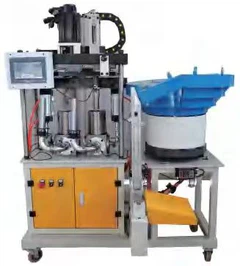
Data center equipment manufacturers may apply silicone by robot or meter-mix system in enclosures, power electronics, sensors and cooling components. Automation improves repeatability only when the process is controlled.
Key parameters include:
material identity and batch;
conditioning temperature;
pump and hose compatibility;
one- or two-component delivery;
mix ratio and homogeneity;
flow rate and robot speed;
bead position and cross-section;
maximum pause time;
surface preparation;
cure before testing or packing;
inline inspection and traceability.
A camera can confirm bead geometry but cannot see contamination under the bead. Destructive sections, adhesion tests and functional leak tests remain necessary according to risk.
Fast expansion of equipment production may encourage new suppliers. Manufacturers should qualify bulk-pack behavior, not only hand-applied cartridge samples.
Material Compatibility with Plastics and Coatings
Electrical and cooling equipment uses diverse plastics, powder coatings, plated metals, cable jackets and gaskets. Additives and release agents can influence adhesion or migrate into silicone.
Project testing should include actual production parts. Laboratory plaques do not reproduce mould-release residue, fiber reinforcement or surface texture.
Watch for:
adhesive separation;
softening or swelling;
stress cracking of plastic;
discoloration;
cure inhibition;
corrosion;
change in electrical properties;
loss of gasket compression;
contamination of optical surfaces.
Compatibility is not proven by initial stickiness. Age samples under heat, humidity, chemical and mechanical conditions representative of service.
Cleanliness and Foreign-Material Control
Data center equipment manufacturing often has strict cleanliness requirements. Sealant strings, cured particles, mixing debris or contaminated wipes can become foreign material.
Production procedures should cover:
sealed storage and material conditioning;
controlled pail or cartridge opening;
line clearance during changeover;
mixer and nozzle change;
wiping materials and disposal;
protection of connectors and ports;
cure-particle prevention during stops;
inspection before enclosure closure;
tool and blade accountability.
The sealant supplier can support suitable packaging, pump recommendations and shutdown procedures.
What Data Center Buyers Should Ask
For building-envelope sealants
What movement classification applies?
Is the product designed for long-term exterior UV and weather exposure?
Has it been tested on the actual façade coating?
Which primer, cleaner and backing are required?
What are cold- and hot-weather application limits?
How will field adhesion be verified?
For industrial or electronics sealants
What exact function is the grade designed for?
What cure chemistry and by-products are involved?
Are electrical properties documented with methods?
Is corrosion behavior evaluated?
Which plastics, metals and coatings have been tested?
What is the cure depth in the real geometry?
Is automated dispensing supported?
For firestop materials
Which tested or listed system applies?
Does the installed configuration match it?
How is inspection and documentation handled?
For cooling-fluid contact
Has the material been aged in the exact fluid?
What changes in mass, volume, hardness and adhesion occur?
Are extractables or contamination concerns evaluated?
What is the leak-test and service history?
A Supplier Opportunity-and a Branding Risk
The words AI and data center attract attention, and material companies may be tempted to label existing products for the sector without new evidence.
That approach creates risk. Data center customers are technically sophisticated and often require vendor qualification, change control and detailed records. Broad claims are likely to trigger more questions, not faster sales.
A stronger strategy is to identify genuine application fit:
exterior construction weatherseal;
low-emitting interior joint sealant;
listed firestop system component;
electronics-grade adhesive;
enclosure gasket or seal;
coolant-compatible component adhesive;
thermally conductive interface material;
automated-dispensing grade.
Each category needs its own data. A portfolio can serve the market, but one product rarely serves the entire facility.
Case Scenario: Sealing a Liquid-Cooling Manifold Sensor
An equipment manufacturer needs to attach and seal a sensor housing to a liquid-cooling manifold. The assembly sees warm coolant, vibration and pressure cycling. A general neutral-cure silicone bonds well in an initial room-temperature trial.
Before approval, engineering reviews the failure consequences and asks whether the sealant directly contacts coolant. Production parts and the exact fluid are aged at relevant temperature. Adhesion, swelling, hardness and leakage are measured. Cure by-products and sensor contamination are evaluated. The bond geometry is redesigned to reduce peel stress. A controlled dispense process and cure hold are validated.
The initial "sticks well" observation becomes one small part of the decision.
This is the standard the data center supply chain will increasingly expect. Reliability comes from defined functions and evidence, not sector branding.
Case Scenario: Cable Penetration During Expansion
A live facility adds cable capacity through a rated wall. The contractor proposes filling the opening with a silicone labeled high temperature.
The correct process identifies the wall rating, cable type, tray or bundle, opening size and permitted system. The team selects a tested firestop configuration and installs the specified backing and sealant depth. The finished penetration is labeled and documented. Future cable additions are managed through the same system.
Using the wrong material could compromise compartmentation even if the bead looks complete. In data centers, visual neatness is not proof of fire performance.
2026 Market Outlook
DOE's latest data center information emphasizes scale, energy, cooling and reliability. As investment continues, material demand will spread across both construction and equipment manufacturing.
Silicone suppliers can benefit if they invest in:
application-specific qualification;
electronics and corrosion expertise;
fluid-compatibility testing;
automated-dispensing support;
low-emission construction grades;
weatherproof façade systems;
firestop system documentation where applicable;
batch traceability and change control;
rapid technical response during product development.
The market is also likely to value suppliers that know when not to recommend a product. Technical honesty reduces qualification time and builds long-term trust.
Five Specification Zones Inside a Data Center Project
Zone 1: exterior shell
Specify movement-capable weatherseal, substrate adhesion, UV performance and water-control integration. Use façade mock-ups and field testing.
Zone 2: occupied support spaces
Prioritize low-emitting documentation, clean finish, cure planning and compatibility with interior coatings. Include primers and cleaners in the review.
Zone 3: white space and electrical rooms
Control contamination, dust, cure by-products and maintenance access. Confirm whether a construction joint or equipment-grade material is needed.
Zone 4: mechanical and cooling plant
Review vibration, condensate, temperature, pressure and chemical exposure. Direct fluid contact requires application-specific validation.
Zone 5: rated barriers
Use tested firestop or fire-resistant joint systems and document every penetration. Do not allow generic substitution.
Dividing the project into zones prevents one broad sealant specification from being applied everywhere.
Maintenance Planning for Always-On Facilities
Data centers cannot tolerate surprise leaks, so inspection should be coordinated with planned maintenance. Create an asset map of exterior joints, roof transitions, mechanical penetrations and critical interior seals.
Inspect for adhesion loss, cracks, hardened material, staining, corrosion and previous patches. Use water testing only with a clear hypothesis and interior protection. Keep weeps and drainage routes open.
For equipment assemblies, establish replacement criteria for gaskets and sealed components. Record coolant, temperature and service hours. A joint hidden behind live equipment may require redundancy or monitoring rather than routine access.
Closeout data should include exact product, batch, location and repair method. The information can reduce downtime years later.
Data Center Tender Questions for Sealant Vendors
Buyers can require vendors to identify each proposed grade by function. The submission should distinguish construction weatherseal, interior sealant, equipment adhesive and firestop-system component.
Ask for current technical and safety data, test reports, substrate compatibility, emissions data, electrical properties where relevant, chemical exposure results, shelf life and change control. Require the vendor to state exclusions.
For industrial applications, request a trial plan covering production equipment, cure, adhesion and ageing. For critical construction joints, request mock-up and field-support capability.
The tender should reject phrases such as "suitable for all data center uses" unless the supplier separates and proves those uses.
Qualification Under Compressed Schedules
Rapid construction does not eliminate the time needed for cure and ageing tests. Teams can manage schedule by starting material qualification during design, not after equipment arrives.
Use a staged process: document screening, rapid adhesion tests, parallel compatibility ageing, pilot production and defined conditional approval. Identify long-lead tests and freeze critical substrates early.
If a temporary decision is necessary, record the limitation and containment. Do not convert a preliminary lab result into permanent approval through silence.
Suppliers can help by maintaining data on common coatings and plastics, but the customer's actual material remains authoritative.
Sustainability Claims in a High-Energy Sector
Data center projects face scrutiny over energy and water use. Sealant suppliers may be tempted to claim that a product makes facilities sustainable.
A sealant can support durable envelopes, leak prevention or efficient assembly, but building-level savings require evidence. Avoid assigning a percentage energy reduction to a joint without analysis.
More credible contributions include reduced rework, longer maintenance intervals, bulk packaging, documented low emissions and precise dispensing that reduces overfill. State the boundary and data.
Reliability itself can avoid premature component replacement, but that benefit should be described carefully rather than converted into an unsupported carbon number.
Qualification Matrix by Failure Consequence
Not every bead needs the same approval effort. A cosmetic joint in a noncritical office and a coolant seal above energized equipment should not follow identical plans.
For low-consequence joints, document review, adhesion screening and visual inspection may be sufficient. Medium-consequence applications may add environmental ageing, functional leak tests and periodic destructive sampling. High-consequence applications can require design review, redundancy, extended chemical exposure, electrical testing, production capability analysis and customer approval.
Define the consequence before choosing test depth. Consider safety, downtime, equipment value, access and detection. A hidden leak that remains undetected deserves more conservative control than a visible, easily repaired bead.
The matrix also improves supplier communication. Instead of asking for every possible test, buyers explain which failure modes matter. Suppliers can recommend an appropriate grade or state that they lack evidence.
Storage and Shelf-Life Control on Large Projects
Data center construction can involve large material purchases and shifting schedules. Sealant may sit in warehouses or site containers through heat and cold.
Specify storage range and minimum remaining shelf life at delivery. Use first-expiry-first-out rotation. Protect cartridges, sausages and pails from direct sun, water and damaged seals.
Do not "recover" aged material by warming or mixing unless the manufacturer provides a procedure. Expired sealant may extrude normally while cure or adhesion has changed.
For equipment factories, scan material at connection and prevent use after expiry. Record opening time for bulk containers where relevant.
Failure Containment and Root Cause
When a sealant-related alarm or field failure occurs, stop affected work and define the suspect range. Preserve product, substrate and process samples. Collect records before changing equipment settings.
Root-cause analysis should consider material, method, machine, environment and substrate. Common causes include contamination, off-ratio mixing, wrong product, condensation, incompatible plastic, premature testing and geometry.
Avoid replacing all material immediately without evidence; that can erase clues. Also avoid restarting after a cosmetic adjustment when the functional risk remains unknown.
A disciplined investigation produces corrective action that prevents recurrence rather than a debate between supplier and installer.
Workforce and Safety Considerations
Industrial silicones may be dispensed under high pressure, while construction teams work at height or near live equipment. Product safety and application safety must be addressed together.
Follow safety data, ventilation, gloves and eye protection requirements. Guard automated cells and isolate pressure before maintenance. Use approved tools around electrical systems. Coordinate hot work and firestop repair.
Low odour does not mean no precautions. Neutral cure does not mean every by-product is acceptable in a confined space. Training should explain the actual product rather than rely on familiar chemistry names.
Frequently Asked Questions
Are silicone sealants widely used in data centers?
Silicone-based materials can appear in building envelopes, HVAC equipment, electrical enclosures, electronics and some cooling-related assemblies. The products are application-specific and not interchangeable.
Can construction silicone be used on electronics?
Not without suitable evidence. Electronics applications may require neutral cure, low corrosion, controlled ionic content, electrical properties and compatibility with sensitive components.
Is high-temperature silicone a firestop?
No. Fire resistance comes from a tested or listed system installed in the specified configuration. Temperature resistance alone does not create a fire rating.
Can silicone contact liquid-cooling fluids?
Only after compatibility and functional validation with the exact fluid, temperature, pressure and geometry. Silicone formulations respond differently.
Does low VOC mean low outgassing?
No. They are different metrics with different methods. Define the relevant test for the application.
What is the most important sealant property for data centers?
There is no single property. The priority may be movement, fire-system performance, electrical insulation, corrosion compatibility, fluid resistance, low emissions or automated process stability depending on the joint.
Final News Analysis
AI infrastructure is pushing data center investment into a new phase, and advanced cooling receives most of the attention. Behind the headlines is a network of material interfaces that must remain dry, sealed, insulated, fire-safe and maintainable.
Silicone materials can support many of those interfaces, but only when product category matches function. The opportunity for suppliers is not to sell one "data center silicone." It is to provide a technically organized portfolio backed by compatibility data, controlled manufacturing and application support.
As facilities become more powerful and equipment more dense, small sealing decisions will carry larger consequences. Precision will be the strongest keyword in this growing market.
Send Inquiry