




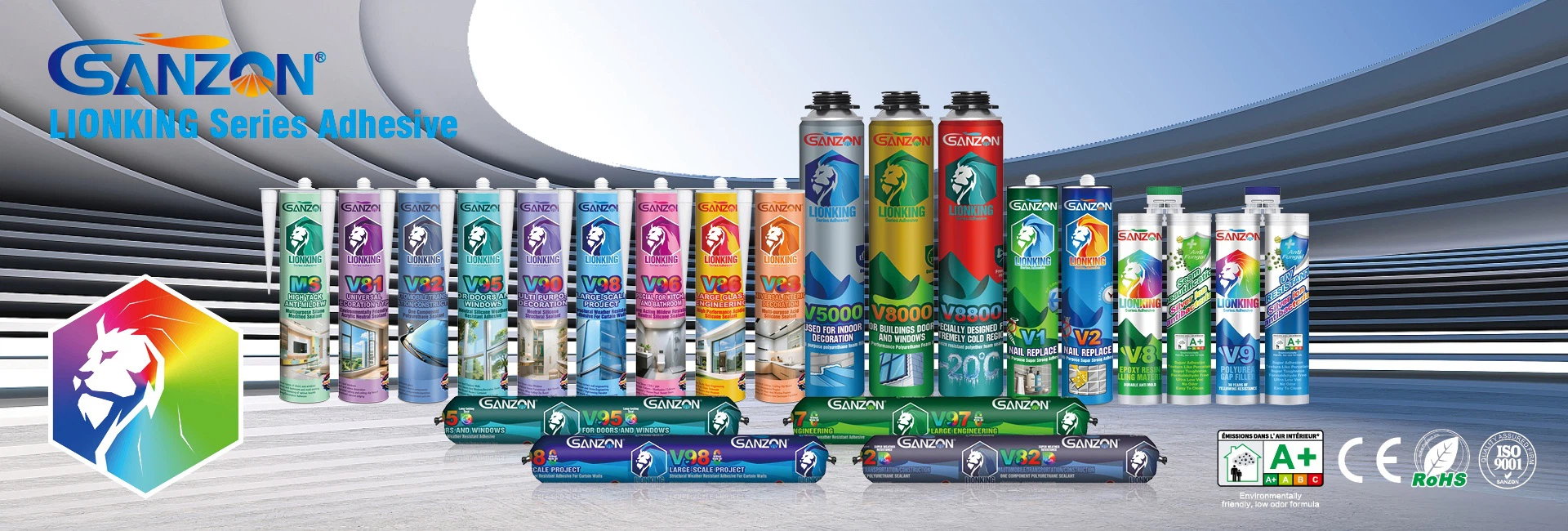
The Critical Role of Silicone Sealant in Door and Window Sealing & Bonding
May 13, 2026
Leave a message

Modern residential and commercial doors and windows are not only basic building components for lighting and ventilation but also key barriers that determine building energy efficiency, indoor comfort, and structural stability. Among all auxiliary materials for door and window installation, silicone sealant stands out as an indispensable core material, delivering comprehensive protection through precise sealing and stable bonding. Many people underestimate the value of silicone sealant, regarding it merely as a decorative filling material. In fact, high-quality silicone sealant directly determines the airtightness, watertightness, thermal insulation performance, and long-term service life of doors and windows, becoming the invisible guardian of building doors and windows.
Doors and windows inevitably form tiny gaps during installation, including gaps between window frames and wall openings, joints between glass and frames, and splicing gaps of door and window profiles. These seemingly insignificant gaps are the main channels for outdoor wind, rain, dust, and noise to invade the indoor space, and also the key weak points of building heat loss. Ordinary filling materials such as putty and ordinary glue are prone to aging, cracking, and peeling after long-term exposure to natural environments, failing to maintain long-term sealing effects. In contrast, silicone sealant is specially formulated for building door and window scenarios, with unique molecular structure advantages that adapt to the long-term outdoor and indoor alternating use environment of doors and windows.
The most prominent advantage of silicone sealant for doors and windows is its excellent weather resistance and anti-aging performance. Doors and windows bear temperature changes throughout the year, from high-temperature exposure in summer to low-temperature freezing in winter, as well as ultraviolet radiation, wind and rain erosion. Conventional sealing materials will gradually harden, shrink, crack or fall off under such alternating conditions, resulting in air leakage and water seepage of doors and windows. Silicone sealant maintains stable elasticity and physical properties in the temperature range of -50℃ to 200℃, and is not easy to age and deteriorate under long-term UV irradiation. It can effectively resist seasonal temperature changes and harsh weather erosion, ensuring that the door and window sealing layer remains intact for more than ten years.
In terms of practical use, silicone sealant greatly improves the comfort of indoor living and working environments. By filling all gaps of doors and windows tightly, it completely blocks outdoor cold and hot air convection, effectively reducing building energy consumption for air conditioning and heating, and achieving significant energy-saving effects. At the same time, its tight sealing structure can isolate outdoor traffic noise, wind noise and environmental noise, greatly improving indoor quietness. In rainy and humid seasons, silicone sealant's excellent waterproof performance prevents rainwater from penetrating along door and window gaps, avoiding wall mildew, wall peeling and internal steel structure corrosion caused by water seepage.
In addition to sealing performance, the stable bonding performance of silicone sealant also plays a vital role in door and window safety. It can form a strong adhesive bond with common door and window materials such as aluminum alloy, plastic steel, glass, and wood. It firmly fixes the glass on the window frame to prevent glass loosening, shaking or falling off caused by long-term wind vibration and thermal expansion and contraction, improving the overall structural stability of doors and windows. Different from rigid adhesives, silicone sealant has excellent flexible stress relief ability. It can follow the micro-displacement and deformation of door and window profiles caused by temperature changes, buffer structural stress, and avoid cracking and failure of the bonding layer, which is the core reason why it is more durable than ordinary adhesives.
It is worth noting that different types of silicone sealants have different application scenarios for doors and windows. Neutral silicone sealant is the mainstream choice for modern door and window engineering, because it has no corrosivity, will not damage aluminum alloy frames, coated glass and other sensitive materials, and has no pungent odor, meeting indoor environmental protection requirements. Acidic silicone sealant has high bonding strength and fast curing speed, and is suitable for simple glass bonding scenarios without metal and stone materials. Reasonable selection of silicone sealant according to actual needs can maximize the service effect and service life of doors and windows.
In conclusion, silicone sealant is not a trivial auxiliary material in door and window engineering, but a key functional material that integrates sealing, waterproofing, energy saving, noise reduction and safety protection. High-quality silicone sealant can eliminate common problems such as door and window air leakage, water seepage, noise and short service life, and continuously maintain the efficient and stable operation of building doors and windows throughout the building's life cycle.
Send Inquiry