

Silicone Sealant Selection Guide: Key Factors Every Buyer Should Consider Before Purchase
Jul 14, 2026
Leave a message
Silicone sealant is widely used in construction, glazing, home improvement, automotive assembly, industrial manufacturing, and many other applications. Although products may look similar in the cartridge, their performance can vary significantly. A sealant that works well around a bathroom sink may be unsuitable for a curtain wall, while a general-purpose product may fail when exposed to high temperatures, continuous sunlight, or strong joint movement.
For buyers, selecting the right silicone sealant is not simply a matter of comparing prices. The correct choice depends on the application, substrate, curing system, movement requirements, environmental exposure, and expected service life. Understanding these factors before purchasing can prevent adhesion failure, discoloration, cracking, leakage, and costly replacement work.
1. Start With the Application
The first question should always be: where will the silicone sealant be used?
Different applications place different demands on the material. A sanitary sealant used in a kitchen or bathroom needs excellent waterproof and mildew-resistant performance. A weatherproofing sealant used on an exterior façade must tolerate sunlight, rain, wind, and temperature changes. Structural glazing requires a specially formulated silicone with verified mechanical strength and compatibility.
Common silicone sealant categories include:
General-purpose silicone sealant
Sanitary and anti-mold silicone sealant
Window and door sealant
Weatherproof construction sealant
Structural glazing silicone
High-temperature silicone
Electrical and electronic-grade silicone
Aquarium or food-contact sealant
Buyers should avoid choosing one product for every job. A sealant may appear to adhere properly during installation but fail later because it was not designed for the actual conditions.
2. Understand Acetoxy and Neutral Cure Systems
Silicone sealants are commonly divided into acetoxy-cure and neutral-cure products.
Acetoxy silicone releases an acidic, vinegar-like odor during curing. It generally cures quickly and bonds well to glass, ceramic, and many non-porous surfaces. It is often used for bathrooms, kitchens, glass installations, and general household repairs.
However, acetoxy silicone may react with sensitive metals, concrete, natural stone, mirrors, or certain coated surfaces. It can contribute to corrosion or staining when used on incompatible substrates.
Neutral-cure silicone releases less aggressive by-products and usually has a milder odor. It is more suitable for aluminum, metal, concrete, masonry, coated glass, plastics, and many construction materials. Neutral silicone is widely used for windows, doors, curtain walls, exterior joints, and industrial assembly.
The curing system should be matched carefully to the substrate. When buyers are unsure, they should request adhesion and compatibility information from the supplier rather than relying only on the product name.
3. Check Adhesion to the Intended Substrate
Adhesion performance is one of the most important selection factors. Silicone sealant may need to bond to glass, aluminum, stainless steel, ceramic, concrete, painted surfaces, plastic, wood, stone, or composite panels.
A product that performs well on glass may not bond equally well to powder-coated aluminum or porous concrete. Surface coatings, oils, dust, release agents, and moisture can also affect adhesion.
Before purchasing, buyers should confirm:
Which substrates are recommended
Whether a primer is required
Whether the sealant is suitable for porous or non-porous materials
Whether it is compatible with painted or coated surfaces
Whether adhesion testing is available
For large projects, a small-scale site test is strongly recommended. The test should be carried out on the actual production materials because laboratory conditions may not fully represent the final installation environment.
4. Review Movement Capability
Building joints expand, contract, vibrate, and shift. Temperature changes, wind pressure, settlement, and mechanical loading can all create movement. If the sealant cannot accommodate that movement, it may tear, crack, or separate from the joint surface.
Movement capability is usually expressed as a percentage, such as ±12.5%, ±25%, or ±50%. A higher percentage generally indicates that the cured sealant can tolerate greater joint movement.
For static indoor joints, moderate movement capability may be sufficient. For façade systems, expansion joints, metal panels, and high-rise construction, a higher-performance product is often required.
Buyers should also examine elasticity, tensile strength, elongation, and modulus. A low-modulus silicone is softer and stretches more easily, making it suitable for joints with substantial movement. A high-modulus product is firmer and may be preferred where greater rigidity or load resistance is needed.
5. Consider Indoor and Outdoor Exposure
Outdoor silicone sealant must survive long-term exposure to ultraviolet light, rain, heat, cold, humidity, and air pollution. Poor-quality products may harden, shrink, crack, lose adhesion, or discolor after prolonged exposure.
For exterior use, buyers should look for:
UV resistance
Weather resistance
Water resistance
Temperature stability
Resistance to aging
Long-term flexibility
Indoor sealants may have different priorities. Low odor, low emissions, mold resistance, appearance, and ease of application can be more important in kitchens, bathrooms, offices, schools, and hospitals.
A product described simply as "waterproof" may not necessarily be suitable for continuous exterior exposure. The technical data should clearly identify whether it is intended for indoor, outdoor, or both types of application.
6. Evaluate Temperature Resistance
Temperature performance should be considered during both application and service.
The application temperature range indicates the conditions under which the sealant can be installed. If the substrate is too cold, hot, wet, or frozen, adhesion may be reduced.
The service temperature range indicates the temperatures the cured silicone can tolerate over time. Standard construction silicone may be suitable for normal environmental conditions, while ovens, engines, industrial equipment, lighting systems, and heating components require high-temperature formulations.
High-temperature silicone is often available in red, black, gray, or other heat-resistant colors. Buyers should confirm whether the stated temperature limit applies to continuous exposure or only short-term peak conditions.
7. Check Curing Speed and Depth
Silicone sealant cures by reacting with moisture in the air. The surface forms a skin first, while the deeper material cures gradually.
Important curing-related specifications include:
Skin-over time
Tack-free time
Curing depth per 24 hours
Full curing time
Recommended joint dimensions
A fast skin-over time may be useful for high-speed production, but it can reduce tooling time. A slower-curing product may allow easier finishing on large joints but require more protection before handling.
Thick sealant sections take longer to cure than thin ones. Buyers should not assume that the entire joint is fully cured just because the surface feels dry. For deep joints, correct joint design and backing material are essential.
8. Consider Mold and Mildew Resistance
In humid environments, ordinary silicone can develop mold growth on its surface, particularly where soap residue, dirt, and moisture accumulate.
Sanitary silicone contains additives that help resist mold and mildew. It is suitable for bathrooms, showers, sinks, kitchens, laundry rooms, and other wet areas.
However, mold-resistant silicone does not eliminate the need for cleaning and ventilation. Even premium products can become stained if moisture remains continuously trapped on the surface.
Buyers should also check whether the sanitary sealant is suitable for the required substrate. Some products may work well on ceramic and glass but may not be recommended for natural stone or certain plastics.
9. Pay Attention to Color and Appearance
Silicone sealant is available in clear, white, black, gray, bronze, brown, and many custom colors. Appearance matters because the joint often remains visible after installation.
Clear silicone is useful when a less noticeable finish is required, but it may still reflect light or show the joint background. White silicone is popular in sanitary applications, while black and gray products are frequently used for glazing, automotive, and industrial work.
Color stability is also important. Low-quality silicone may yellow, fade, or change tone after exposure to sunlight, chemicals, or cleaning agents. For visible architectural joints, buyers should ask whether color matching and batch consistency can be controlled.
Natural stone projects require special caution. Standard silicone may cause staining around marble, granite, or other porous surfaces. A non-staining stone silicone should be selected for these applications.
10. Review Packaging and Shelf Life
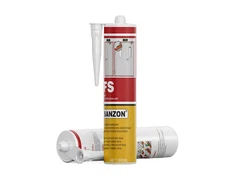
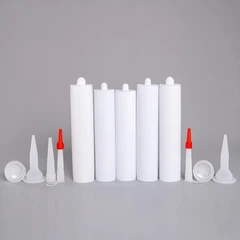
Silicone sealant is commonly supplied in cartridges, foil sausages, pails, or drums. The appropriate packaging depends on the project scale and application equipment.
Cartridges are convenient for household use, repairs, and small jobs. Sausage packaging reduces waste and is often preferred for professional construction. Bulk packaging may be suitable for automated industrial production.
Buyers should check:
Net volume or weight
Cartridge or sausage dimensions
Nozzle and packaging quality
Production date
Expiry date
Storage conditions
Expired or poorly stored silicone may cure slowly, form lumps, separate, or fail to extrude properly. Products should generally be stored in a cool, dry environment away from direct sunlight and excessive heat.
11. Compare Technical Data, Not Only Marketing Claims
Terms such as "premium," "strong," "waterproof," or "high quality" are not enough to evaluate performance. Buyers should request a technical data sheet and review measurable properties.
Useful information may include:
Density
Skin time
Cure rate
Hardness
Tensile strength
Elongation
Movement capability
Application temperature
Service temperature
Shelf life
Applicable standards
The data should be relevant to the specific product rather than copied from a general catalog. For important projects, test reports, certifications, and quality-control records provide additional confidence.
12. Consider Standards and Certification Requirements
Construction and industrial projects may require compliance with regional or international standards. Depending on the market and application, buyers may need products tested according to ASTM, ISO, EN, GB, or other standards.
Structural glazing, fire-rated joints, low-emission construction, food-contact applications, and aquarium use may require additional documentation.
The required certificate should be confirmed before placing an order. A supplier may offer several visually similar products, but only one formulation may meet the relevant standard.
For export buyers, labeling, safety documentation, language requirements, and local chemical regulations should also be reviewed.
13. Balance Price With Long-Term Performance
Silicone sealant usually represents a small percentage of the total project cost, yet failure can create major losses. Water leakage, glass damage, corrosion, mold, façade repairs, and customer complaints are expensive to correct.
A low unit price may be attractive, but buyers should consider:
Coverage per cartridge
Application efficiency
Curing consistency
Failure rate
Expected service life
Warranty and technical support
Cost of rework
The cheapest sealant is not always the most economical choice. A reliable product with stable quality can reduce labor delays, callbacks, waste, and maintenance costs.
14. Evaluate the Supplier
Product performance also depends on manufacturing consistency and supplier support. A professional silicone sealant supplier should be able to explain product differences, recommend suitable applications, provide technical documents, and support compatibility testing.
Buyers may wish to ask about:
Manufacturing experience
Production capacity
Quality-control procedures
Raw material management
Batch traceability
Private labeling
Custom colors and packaging
Export documentation
Technical support
Samples should be tested before large-volume orders. For OEM projects, packaging artwork, cartridge quality, carton strength, and production lead time should be confirmed in advance.
Final Thoughts
Choosing silicone sealant requires more than selecting a color and comparing prices. Buyers should evaluate the application, substrate, curing system, movement capability, exposure conditions, temperature range, curing performance, appearance, packaging, certification, and supplier reliability.
The right silicone sealant should bond securely, remain flexible, resist environmental stress, and maintain its appearance throughout the expected service life. When technical requirements are clearly defined before purchase, buyers can avoid common failures and achieve more reliable results.
A careful selection process may take a little more time at the beginning, but it can save considerable time, labor, and cost throughout the life of the project.
Send Inquiry