

Silicone Sealant Procurement in 2026: EU CPR, Digital Product Passports and Smarter Supplier Qualification
Sep 14, 2026
Leave a message

Buying silicone sealant used to look like a straightforward comparison of color, cartridge size, cure system and price. In 2026, that approach is no longer sufficient for serious construction, glazing, window, door and industrial programs. Procurement teams are being asked to prove not only that a sealant was delivered, but also that it was correctly selected, consistently manufactured, supported by usable technical evidence and traceable through the supply chain.
The regulatory environment is also changing. Regulation (EU) 2024/3110, the new European Construction Products Regulation, entered into force in January 2025 and begins applying broadly from January 2026, subject to its transitional provisions and the development of product-specific requirements. It introduces a framework in which digital product information, environmental performance and Digital Product Passports become increasingly important. This does not mean that every cartridge of silicone sealant instantly needs the same new document on the same date. It does mean that manufacturers, importers and professional buyers should build data readiness now instead of waiting for a tender to expose missing records.
This guide explains how to purchase silicone sealant in that new environment. It is written for distributors, façade contractors, glazing companies, window and door manufacturers, project buyers, private-label brands and importers. The objective is practical: turn a vague request for "good silicone" into a controlled specification, a defensible supplier decision and a repeatable incoming-quality process.
Important note: Regulatory scope depends on the product's intended use, the applicable harmonised technical specification, the country of sale and the claims made by the manufacturer. Obtain project-specific legal or conformity advice where necessary. A general-purpose sealant must never be presented as structural glazing, fire-resistant, food-contact, aquarium or electrical-grade material without relevant evidence.
Why Silicone Sealant Procurement Is Changing
Three developments are converging.
First, building-product information is becoming more structured. Buyers increasingly expect a technical data sheet, safety data sheet, declaration or conformity documentation where applicable, installation guidance, batch identification and evidence behind performance claims. A glossy catalogue is not a substitute for controlled technical documentation.
Second, asset owners are looking beyond the day-one purchase price. A low-priced sealant that causes staining, loss of adhesion or premature joint failure can create access costs, façade cleaning, replacement labor, tenant disruption and warranty disputes many times greater than the material saving. Procurement is therefore moving toward total installed risk.
Third, digital traceability is becoming a commercial capability. The new EU CPR provides for a construction Digital Product Passport system and strengthens the role of accessible product information. Even before every product family is fully covered by detailed rules, buyers can evaluate whether a supplier has the systems needed to maintain consistent data: controlled document versions, unique product identifiers, batch records, test-report links and change notifications.
The result is a new buying question. Instead of asking only, "What is your price per cartridge?" a capable buyer asks, "Can this product, its evidence and its manufacturing history survive technical review throughout the project?"
What the New EU CPR Means for Sealant Buyers
The revised Construction Products Regulation establishes harmonised rules for marketing construction products in the European Union. Among its headline changes are a greater emphasis on sustainability information, digital access to product data and a future Digital Product Passport framework for construction products.
For a sealant buyer, five principles matter.
1. Intended use controls the compliance route
"Silicone sealant" is a chemistry family, not a complete regulatory classification. A product used for internal sanitary joints, perimeter sealing around windows, weathersealing a curtain wall, bonding an industrial component and structurally retaining glass may fall under very different specifications, tests and responsibilities.
Start with the joint and the function. Define whether the material is intended to accommodate movement, exclude water, limit air leakage, bond components, resist mould growth, provide a declared fire-resistance function or contribute to another system performance. Never select a product merely because the words high performance appear on the label.
2. Product data must be connected to evidence
A useful technical data sheet states test methods, units, typical or declared values, conditioning assumptions and limitations. It should distinguish uncured properties-such as density, tooling time, skin-over time and application temperature-from cured properties such as hardness, tensile behavior, movement capability and service-temperature range.
Procurement teams should ask which claims are supported by third-party reports, which come from internal testing and which are only general descriptions. This distinction is central to due diligence. It also prevents a common error: comparing values obtained under different methods as if they were directly equivalent.
3. Digital readiness starts with clean master data
A Digital Product Passport is not simply a QR code placed on packaging. A QR code can point anywhere; the value lies in the governed information behind it. A supplier preparing for digital product information should be able to maintain:
a stable product name and unique identifier;
intended-use descriptions and variant data;
current technical and safety documents;
applicable declarations, certifications and test reports;
manufacturer and responsible economic-operator details;
batch or production traceability appropriate to the product;
installation, maintenance, removal and end-of-life information where required;
controlled revision dates and a record of substantive changes.
Ask the supplier to demonstrate its document-control process. If the same product appears under several names with conflicting values, digital presentation will amplify the inconsistency rather than solve it.
4. Environmental claims need defined boundaries
Buyers may encounter terms such as low VOC, solvent-free, low odour, environmentally friendly, sustainable or reduced carbon. These statements are not interchangeable. VOC content is not the same as chamber-tested emissions. Low odour does not prove low emissions. A product's carbon footprint is not established by saying that silicone is durable.
When environmental information is important, request the document and the method behind the claim. Clarify whether the number refers to the sealant alone or a packaged product, whether it is a product-specific or industry-average result, what life-cycle stages are included and how frequently the data are reviewed.
5. Transition must be managed rather than guessed
The revised CPR contains transition mechanisms, and detailed implementation will develop by product family. Buyers should avoid two extremes: assuming nothing changes, or demanding a document that is not yet legally defined for the product in question. A better approach is to maintain a compliance matrix by destination market and intended use, with an owner responsible for monitoring official updates.
Build the Specification Before Requesting Prices
The strongest request for quotation is built around performance and application conditions. It allows qualified suppliers to offer the correct grade and makes quotations comparable.
Describe the substrates
List the actual surfaces, not just the broad material category. "Aluminum" might mean mill finish, anodized, powder-coated, PVDF-coated or painted aluminum. "Stone" might mean granite, marble, limestone, engineered quartz or a porous manufactured slab. "Glass" may have coatings or surface treatments. Plastics vary widely in surface energy and plasticizer content.
Include supplier names or coating codes when available. If materials will come from multiple vendors, say so. Adhesion testing on one powder coating does not prove adhesion to every powder coating.
Define joint geometry and movement
Provide nominal joint width, minimum and maximum installed width, design depth, joint length and expected movement. Movement is not merely thermal expansion of one component; it can include building drift, live-load deflection, creep, shrinkage, moisture movement, fabrication tolerance and installation variation.
Movement capability is meaningful only when the joint is designed and installed within the sealant's tested limits. A premium sealant cannot compensate for a joint that is too narrow, too deep, contaminated or bonded on three sides.
State the exposure
Identify interior or exterior use, UV exposure, orientation, rainfall, standing water, cleaning chemicals, salt-laden air, temperature range, humidity and expected service life. For factory application, state line speed, dispensing equipment, component temperature and the time before handling, packing or water exposure.
Separate mandatory requirements from preferences
Mandatory requirements may include an applicable standard classification, a required movement class, specified color stability, documented compatibility or a project-approved test. Preferences may include packaging format, private-label artwork or a particular tooling time. Mixing these categories leads to unnecessary disqualification or an under-specified safety-critical requirement.
Define the approval process
State whether approval requires document review, laboratory samples, project-substrate adhesion tests, compatibility tests, a production trial, independent testing or architect/consultant acceptance. Set realistic lead times. Sealant testing often requires curing and conditioning; asking for results in 24 hours encourages shortcuts.
Neutral Cure, Acetoxy and Other Cure Systems
One-component silicone sealants cure by reacting with atmospheric moisture. The cure system influences odour, compatibility, corrosion risk, early cure behavior and suitable substrates.
Acetoxy silicone sealant
Acetoxy products release acetic acid during cure and are recognized by a vinegar-like odour. They can provide fast skin formation and strong adhesion to suitable non-porous substrates, making them common in certain glass and sanitary applications. However, the acidic cure mechanism can be unsuitable for corrosion-sensitive metals, alkaline substrates, some mirrors and other sensitive assemblies. Compatibility must be checked rather than assumed.
Neutral cure silicone sealant
Neutral cure products release non-acidic by-products and are often selected for broader construction use, coated metals, windows, doors and weathersealing. "Neutral cure" remains a broad label. Different neutral chemistries can have different odour, cure rate, shelf stability and compatibility profiles. Buyers should compare the specific grade and test evidence.
One-component versus two-component systems
One-component sealants are convenient because they cure from ambient moisture without on-site mixing. Cure progresses from the exposed surface inward, so deep sections or enclosed joints need sufficient time.
Two-component silicone systems cure through a mixed reaction and are used where faster, more controlled through-cure or specialized factory processing is needed. They require calibrated mixing, ratio control, equipment maintenance and process checks. A two-component product is not automatically superior; it is appropriate when the production process can control it.
The Technical Data Sheet: What to Read Closely
A technical data sheet is a selection tool, not a warranty that every application will succeed. Review it line by line.
Movement capability
Movement classifications must be tied to a recognized test and the complete designation. Do not reduce the result to a single percentage without understanding whether it indicates extension/compression cycling, class, substrate and conditioning.
Modulus
Low-modulus sealants can place lower stress on joint edges during movement, which is helpful in many façade applications. High-modulus behavior may be desired in other assemblies. "More strength" is not universally better: the sealant, substrate, primer and joint geometry operate as a system.
Skin-over and tack-free time
These values influence tooling, dust pickup and handling. They are strongly affected by temperature and humidity. A laboratory value at standard conditions should not be treated as a guaranteed jobsite time in cold, dry or very humid conditions.
Cure depth or cure rate
Moisture-cure silicones generally cure from outside to inside. Thick beads, enclosed spaces and low humidity slow the process. Procurement teams supporting factory assembly should confirm when the part can be moved, packed, tested or exposed-not merely when the surface becomes dry.
Hardness and mechanical properties
Shore A hardness provides useful information but does not alone predict movement durability, adhesion, tear resistance or long-term weathering. Tensile and elongation values also depend heavily on the test specimen and method. Compare like with like.
Application and service temperatures
Application temperature concerns safe installation and adhesion development. Service temperature concerns the cured product. Confusing them can lead to winter application failures or exaggerated high-temperature claims.
Shelf life and storage
Shelf life normally assumes unopened packaging under stated conditions. High warehouse temperatures can accelerate ageing. Ask whether the supplier uses a manufacture date, expiry date or batch code and how remaining shelf life is controlled at dispatch.
A 12-Part Supplier Qualification Checklist
1. Legal manufacturer identity
Confirm who manufactures the product, who owns the brand and who is responsible in the destination market. Trading-company support may be valuable, but the manufacturing site and technical responsibility must be transparent.
2. Product scope
Obtain a written description of intended uses and exclusions. Look for precise language. A product promoted simultaneously for every possible application without qualifications deserves closer scrutiny.
3. Current documentation
Collect the technical data sheet, safety data sheet, application instructions, declarations and relevant test reports. Check product name, grade, color, revision, test date and manufacturing entity across documents.
4. Standard and test mapping
Build a table linking every mandatory claim to its standard, report number, laboratory, sample description and validity or review status. Record gaps rather than hiding them in email chains.
5. Quality-management system
Ask how raw materials are approved, batches are released, nonconforming product is controlled, measuring devices are calibrated and customer complaints are investigated. Certification can support confidence but does not replace product-level evidence.
6. Batch consistency
Review certificate-of-analysis capability and release parameters. Depending on the product, these may include appearance, density, extrusion, skin time, hardness development or other controlled characteristics. Avoid inventing universal limits; they should reflect the formulation and specification.
7. Traceability and retention samples
Determine whether the supplier can trace finished goods to a production batch and key inputs, how long records are retained and whether batch samples are stored for investigation. The traceability level should reflect project risk.
8. Change control
Require notification before material changes to formulation, critical raw-material source, manufacturing site, test status, packaging or declared performance. "Equivalent raw material" should not be accepted as an undefined concept when compatibility is critical.
9. Application support
Evaluate whether technical staff can review substrates, recommend cleaning and priming, define adhesion-test procedures and diagnose failures. Fast, technically specific answers are more valuable than generic promises.
10. Production capacity and continuity
Verify realistic monthly capacity, lead time, maintenance planning, backup equipment and supply-risk controls. Large theoretical capacity is meaningless if the approved grade cannot be produced consistently during peak demand.
11. Packaging integrity
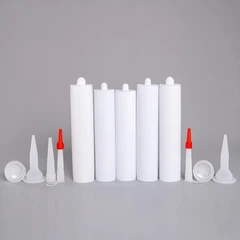
Inspect cartridge, sausage or pail construction; plunger and nozzle fit; seals; label durability; carton strength; pallet pattern and shipping protection. Packaging failures can cause moisture ingress, leakage or unusable product even when the formulation is sound.
12. Complaint and corrective-action process
Ask for a sample investigation workflow. It should capture batch, substrate, surface preparation, joint design, weather, photographs, retained sample findings and corrective action. A supplier that labels every complaint "application error" without evidence is not managing risk.
Factory Audit Questions That Reveal Real Capability
An effective audit follows material flow rather than staying in a meeting room.
At incoming inspection, ask how critical raw materials are identified, sampled, approved and segregated. In production, examine recipe control, weighing accuracy, mixing sequence, vacuum control where relevant and line-clearance procedures. At filling, inspect contamination prevention, net-content checks, coding and seal integrity. In the laboratory, review methods, conditioning, equipment calibration and analyst training. In the warehouse, check temperature, first-expiry-first-out control and quarantine areas.
Use trace exercises. Select a finished batch and ask the team to retrieve its production record, released test results, packaging lot and raw-material references. Then choose a raw-material lot and ask which finished batches used it. The speed and accuracy of this exercise show whether traceability is operational or merely described in a manual.
Also review data integrity. Are results entered directly, transcribed several times or changed without an audit trail? Are out-of-specification results investigated? Are rework rules defined? Digital readiness depends on trustworthy source data.
Sample Approval and Compatibility Testing
Generic adhesion claims do not replace testing on project materials. Establish a sample-approval plan early.
Adhesion testing
Use representative substrates, including actual coatings and cleaning procedures. Test unprimed and primed configurations only when both are technically permitted. Record preparation, bead geometry, cure conditions and failure mode. Cohesive failure in the sealant is different from clean adhesive separation at the interface.
Field adhesion tests can confirm installed performance, but they should follow an agreed procedure and acceptance criteria. Test locations must be repaired correctly afterward.
Compatibility testing
Materials in contact with the sealant-gaskets, setting blocks, backer rods, tapes, membranes, laminated-glass interlayers, coatings and adjacent sealants-can interact. Possible outcomes include discoloration, softening, loss of adhesion or migration. Test the actual material combination rather than relying on a generic statement about "rubber" or "plastic."
Stain testing on porous materials
Stone and other porous substrates may show edge staining or fluid migration. A non-staining claim should be supported by an appropriate method and confirmed on the project material when appearance is critical.
Mock-ups and production trials
For façades, windows and factory assemblies, a mock-up reveals more than a small coupon. It tests access, gunability, tooling, masking, primer flash-off, bead placement, handling time and operator variability. Treat the mock-up as a controlled learning exercise and preserve its records.
Incoming Inspection Without Creating a False Sense of Security
Incoming inspection should verify identity and detect obvious variation, but it cannot reproduce every long-duration qualification test.
A practical plan may include:
product name, color, batch and expiry verification;
packaging and seal inspection;
quantity and net-content sampling;
appearance and extrusion check;
density or other agreed rapid test;
skin-time comparison under controlled conditions;
cured-bead or adhesion checks at defined intervals;
review of the supplier's batch certificate when required;
retention of samples for high-risk projects.
Set sampling according to risk, history and lot size. Tighten checks after a supplier change, formulation change, new color, complaint or long shipping exposure. Reduce inspection only on evidence of stable performance.
Do not release material solely because it extrudes smoothly. Many serious compatibility or durability problems are invisible at receipt.
Private-Label Silicone Sealant: Control the Product Behind the Brand
Private-label programs require extra discipline because the brand owner may be separated from formulation control.
Create a signed product specification that identifies the approved formulation or controlled product code, performance requirements, packaging, artwork, batch coding and change-notification rules. Define who owns test reports and whether they remain usable if the manufacturing relationship ends. Verify that claims on the private-label cartridge match the evidence for the exact supplied product.
Artwork review should involve technical and regulatory staff, not only marketing. Small label space encourages oversimplified claims such as "bonds everything," "100% waterproof" or "permanent." Replace vague absolutes with accurate intended-use language and clear limitations.
For multilingual markets, control translations. Terms such as cure, dry, set, structural, fire-rated and food-safe have specific implications and should not be translated casually.
Total Cost of Ownership: A Better Comparison Model
Unit price is only one line in the installed cost.
Calculate material coverage based on actual joint dimensions and expected waste. Add primers, cleaners, backer rod, masking and nozzles. Include labor for application and tooling, cure-related production time, inspection, access equipment and rework. Then assess risk: potential staining, adhesion failure, schedule delay, warranty exposure and replacement access.
A sealant with better extrusion consistency may reduce operator fatigue and bead variation. A faster but controllable skin time may improve productivity in one climate and create tooling problems in another. Packaging with lower leakage rates may reduce warehouse loss. Technical support that prevents an incompatible primer choice can be worth more than a small price concession.
Use scenario analysis rather than pretending every risk has a precise cost. Compare expected installed cost under normal conditions, a minor-rework case and a major-failure case. This makes risk visible to commercial decision-makers.
Common Procurement Mistakes in 2026
Treating certifications as universal approval
A certificate applies to a defined product, scope, version and sometimes manufacturing site. Confirm the exact match. Do not extend a result from one grade or color to an entire range without evidence.
Comparing unmatched data
Tensile strength, elongation, hardness and movement figures are meaningful only with test methods and conditions. Build a normalized comparison table and mark non-equivalent results.
Approving a sample but not the production product
Record the approved sample batch and link it to the commercial product specification. Require change control. Otherwise, a successful sample can become an irrelevant historical object.
Ignoring storage and ocean freight
Container temperatures and long transit times can consume shelf life or stress packaging. Agree on minimum remaining shelf life at shipment or arrival, pallet protection and handling of delayed containers.
Selecting by color chart alone
Color perception changes with lighting, gloss, joint depth and adjacent materials. Approve cured samples, and establish realistic batch-to-batch tolerance when color is architecturally important.
Using one sealant for incompatible risk categories
General weathersealing, structural glazing, firestop systems and insulating-glass production are not interchangeable. Separate the approval routes and technical responsibility.
A Practical RFQ Template
Include the following fields in a silicone sealant request for quotation:
Project, market and intended application.
Required quantity, forecast and delivery schedule.
Substrates, coatings and contact materials.
Joint dimensions and expected movement.
Interior/exterior exposure and service environment.
Cure-system preference and reason.
Required standards, classifications and project approvals.
Color, packaging and private-label requirements.
Application temperature, tooling window and handling needs.
Required documents and languages.
Sample, compatibility, mock-up and audit process.
Batch certificate, traceability and change-notification requirements.
Minimum remaining shelf life and shipping terms.
Warranty expectations and technical-support scope.
Ask suppliers to identify deviations explicitly. A transparent deviation is easier to evaluate than silent noncompliance.
A 90-Day Supplier-Approval Roadmap
Days 1–15: define and screen
Finalize intended use, substrates, performance and documentation. Issue the RFQ. Screen suppliers for product fit, manufacturer identity, basic evidence and realistic capacity.
Days 16–35: verify documents and samples
Create the claim-to-evidence matrix. Resolve inconsistent names or values. Receive samples from identifiable batches and begin application, adhesion, compatibility and appearance testing.
Days 36–60: audit and trial
Audit the manufacturing and quality system based on risk. Conduct a mock-up or line trial. Evaluate extrusion, tooling, cure behavior, packaging and operator feedback under representative conditions.
Days 61–75: close gaps
Document corrective actions, approve artwork, agree specifications and change-control rules, and define incoming inspection. Repeat failed or inconclusive tests rather than negotiating away technical risk.
Days 76–90: controlled launch
Place a controlled initial order, increase incoming checks, retain samples and monitor early field or factory performance. Hold a formal review before expanding volume.
Frequently Asked Questions
Does every silicone sealant need a Digital Product Passport in 2026?
Do not assume a universal immediate requirement. The revised EU CPR creates the framework, while practical obligations depend on product scope, implementing measures, harmonised specifications and transition provisions. Monitor official EU and national guidance for the exact product and intended use. Regardless of timing, clean digital product data and document control are already valuable.
Is neutral cure always better than acetoxy silicone?
No. Neutral cure generally offers broader compatibility for construction substrates, while acetoxy products can be effective for suitable non-porous applications. Selection should follow substrate, exposure, corrosion sensitivity, project requirements and tested performance.
Can a technical data sheet replace project adhesion testing?
No. The data sheet supports selection, but adhesion depends on the actual substrate, coating, contamination, preparation, primer and cure conditions. Representative testing is essential for critical work.
What is the most important supplier document?
There is no single document. Buyers need a consistent package: product specification, technical and safety data, applicable declarations, supporting reports, installation guidance and traceability. The relationship between those documents matters as much as any one file.
How can a buyer detect a relabeled product change?
Use a controlled product code, approved reference sample, batch certificates where appropriate, periodic verification testing and a contractual change-notification requirement. Monitor unexplained shifts in density, extrusion, odour, cure behavior, color or packaging.
Should the lowest-priced compliant sealant win?
Only after compliance is genuinely established and installed cost is considered. Compare coverage, waste, labor, priming, productivity, failure risk, technical support and remaining shelf life-not just price per cartridge.
Final Takeaway
Silicone sealant procurement in 2026 is an information and process discipline as much as a material purchase. The strongest buyers define the application, map claims to evidence, test the real interfaces, audit traceability, control changes and calculate installed risk. The strongest suppliers make that work easier with precise documents, consistent batches and technically honest support.
The new EU construction-product framework reinforces this direction. Digital Product Passports will matter, but their foundation is not the QR code. It is reliable product identity, verified performance information, controlled revisions and traceable manufacturing. Organizations that build those capabilities now will respond faster to future requirements and make better purchasing decisions today.
Send Inquiry